

Many of our website’s/museum’s fans are no doubt familiar with Philadelphia’s Mütter Museum. Started from the collection of oddities donated by Dr. Thomas Dent Mütter in 1858, the museum has since grown significantly and attracted a wide range of visitors, from medical students, for whom the museum was originally intended for, to seekers of the strange and unusual.
The museum’s collection houses such strangeness as a nine foot human colon that belonged to a sideshow act named “The Human Balloon”, the Hyrtl skull collection (gathered to disprove the claims of Phrenologists that skull shapes dictated personality), the conjoined liver from famous Siamese twins Chang and Eng, a two-headed baby, and many more genuine examples of the medically weird. But who was Dr Mütter and how did he figure into the history of medicine?
Such is the subject of the new book “Dr Mütter’s Marvels” by Cristin O’Keefe Aptowicz, who also wrote an award winning (but still unproduced screenplay about the good doctor. And I mean, good doctor, as opposed to most of the rest of his peers performing medicine in the early to mid-19th century.
Dr Mütter was a compassionate man who went abroad to Paris to study and found a medical community that was both appalling and inspiring. Some of the most advanced surgery in the world was practiced there but there was no consideration for patient care outside of the surgery itself; patients were routinely shipped home immediately after their surgeries, considerably endangering the delicate subjects. There were many contradictions, for example: while Paris had two hospitals for treating those sick with Syphilis, but one of them required all patients to be publicly whipped before and after their entrance to the hospital.
When Mütter returned to America with what he had learned, already formulating ideas on advancing medicine and patient care, he was met with much hostility from a medical community that resisted change with arrogance and ego. Nevertheless, Mütter became one of the first plastic surgeons in America, revolutionizing treatment of those with deformities, burns and scarring with his new treatments, many of which are still in use today.
He butted heads with many contemporaries over his insistence on proper pre and post surgical care of patients, his early adoption of modern anesthesia, as well his insistence that doctors thoroughly wash up before treating patients. It’s hard to believe today, but doctors of the time, thinking even more of themselves than they do today, considered that a ‘gentleman’s hands are clean’ by default. Ever heard that old joke about God thinking he was a doctor? Ugh.
Mütter’s story is a fascinating, and long overdue to be told, one that Aptowicz infuses with charm and can’t-put-it-down readability. The man who is best known for his sizable collection of bizarre medical oddities should really have been known for bringing humane practices to modern medicine.
 Cristin O’Keefe Aptowicz




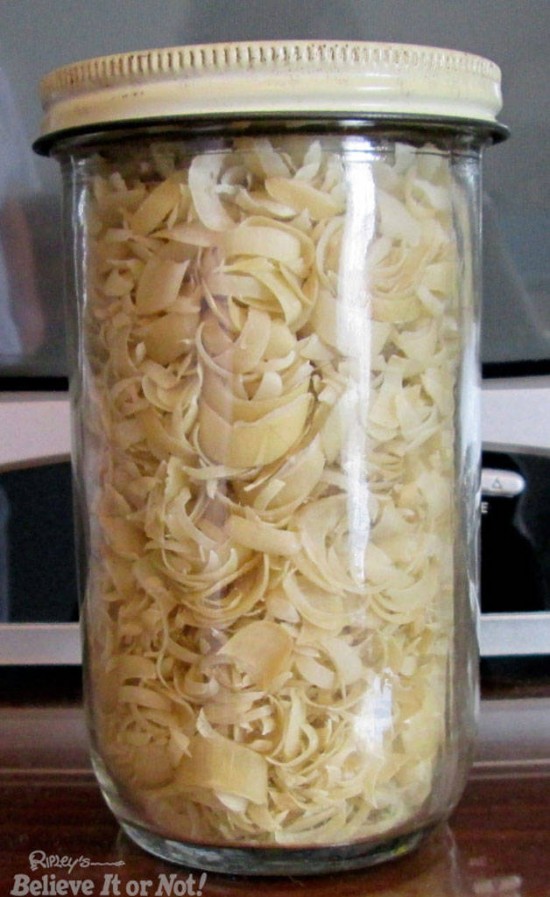 I get the collector’s instinct. Oh boy, do I. My house is absolutely filled with comics, action figures, and 15 bookshelves of movies and TV shows. Yes, somehow I’m even in a successful relationship. But my lady probably wouldn’t be quite so keen if my collection was cast off-pieces of my own body.

 A 8 year old boy in India named Kaleem is suffering from an extremely rare (so rare doctors aren’t really sure what it is) condition that has caused the otherwise healthy child to


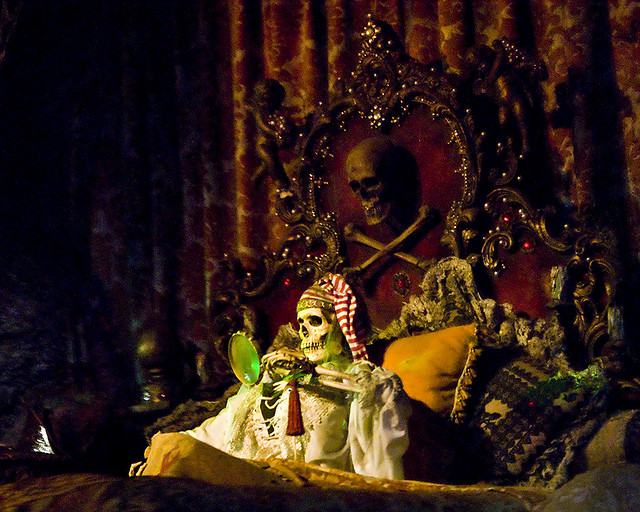 Although the rumors of Walt Disney’s cryogenically frozen corpse being stored underneath the Pirates of the Caribbean ride in Disneyland are decidedly untrue, the popular attraction since 1967 apparently held a


 The New Doctor Who begins his run this Saturday with Peter Capaldi taking over the role of the esteemed space and time traveling gentleman, and SFANTHOR (Museum of the Weird’s sister store) is EXCITED!


